S.J. Schinleber, PhD

Author. Educator. Speaker.

Invite Dr. Schinleber as a guest speaker, expert panelist, or workshop leader. Topics include Holocaust education, WWII history, genocide studies, democracy, and the writing craft.

Get in Touch

Curriculum Vitae

Author, educator, and public speaker with six advanced degrees, decades of teaching experience, and a record of published works, grants, and international scholarship.

Education

2026

Arizona State University, Tempe

Certificate in Genocide Studies

2025

Arizona State University, Tempe & National WWII Museum, New Orleans

MA — WWII Studies

2008

National Lewis University, Chicago

MAT — English & Language Arts

1987

New York University, New York

PhD — Culture & Society

1983

New York University, New York

MA — Culture & Society

1974

University of York, York, England

BA, Honors — English & Related Literatures

Professional Experience

2016 – Present

Northshore Country Day School, Winnetka

Middle School English & Public Speaking Teacher

2009 – 2010

Northshore Country Day School, Winnetka

Middle School English & French Teacher

2008 – 2010

Elmhurst College, Elmhurst

Adjunct Assistant Professor

2005 – 2009

Driscoll Catholic High School, Addison

Senior English Teacher & Department Chair

2005 – 2009

St. Mary's University, Winona

Adjunct Assistant Professor

1996 – 2000

North Central College, Naperville

Assistant Professor, English & Communication

1986 – 1994

New York University, Stern School of Business

Assistant Professor, Managerial Communication

1986 – 1987

St. Vincent's College, Staten Island

Assistant Dean & Director

1985 – 1987

St. John's University, Queens

Assistant Professor, English

1982 – 1983

Macy's Flagship Store, New York

Manager

1977 – 1982

American Home Products Corporation, New York & U.K.

International Sales & Marketing Manager

Honors, Awards, Grants & Publications

2018

Echoes & Reflections Grant — International Holocaust Seminar, Yad Vashem, Israel

Benefit Board Grant — Jewish history sites in Poland

Co-presented "Giving a Damn about Democracy" — Facing History's "On Democracy" Conference, Chicago

2014

Global Grant — Cambridge University, England

2013

Benefit Board Grant — Retracing her father's WWII journey through Italy

2008

Published The Gunner Wore Petticoats, a novel on the Civil War

2002

Village of Northbrook & Fire Department recognition for A Breed Apart

2001

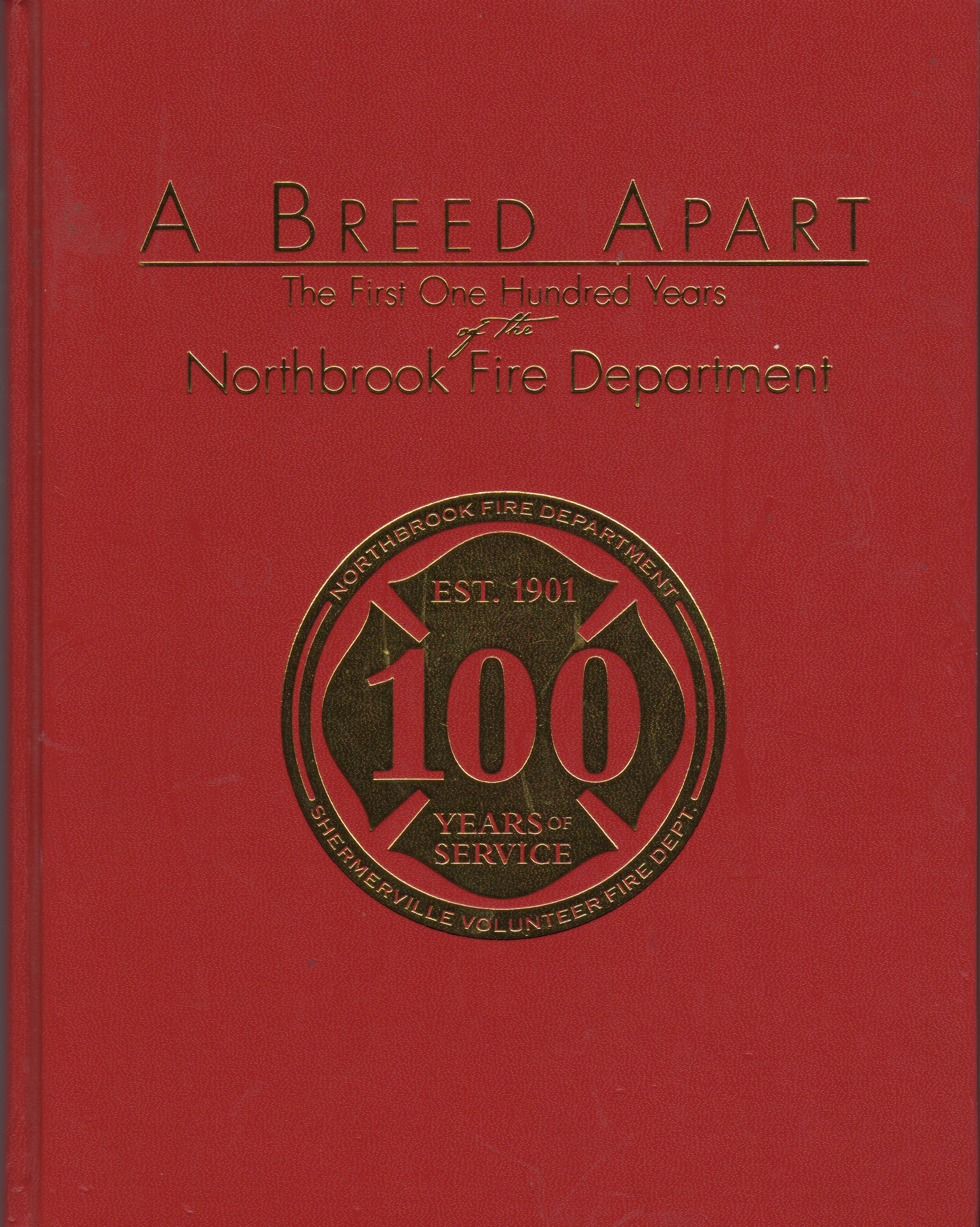
Published A Breed Apart: The First One Hundred Years of the Northbrook Fire Department

1999

National Science Foundation Grant — The Impact of Technology on Older Americans

1990

Outstanding Professor, NYU Stern School of Business

Rudin Grant — Ethical Issues in Business

Community Engagement

2000 – Present

Civil War Reenactor & Presenter

2000 – 2005

Village Safety Commissioner & Historical Society Speaker

2000 – 2004

Chair, Village of Northbrook Fourth of July Association

About

Susan J. Schinleber
Susan J. Schinleber, PhD
Author · Educator · Speaker

Susan J. Schinleber, PhD, is a London-born author, educator, and speaker who has spent her career across three continents and nearly every level of the classroom — from NYU's Stern School of Business, where she was voted Outstanding Professor, to middle school English and public speaking.

She holds five degrees, including a PhD from New York University, an MA in WWII Studies from Arizona State University and the National WWII Museum, and a Certificate in Genocide Studies. A National Science Foundation grant recipient and Cambridge University scholar, she has studied at Yad Vashem in Israel and traveled to Poland and Italy to research the history she writes and teaches about. A polyglot with a global perspective, her work spans languages, borders, and disciplines.

Dr. Schinleber is the author of The Gunner Wore Petticoats, a Civil War novel, and A Breed Apart, a history of the Northbrook Fire Department — with a third book, A Promise of Redemption, currently in progress. She volunteers at the Illinois Holocaust Museum and Education Center and speaks regularly to organizations including the ADL, Facing History, and civic groups across the Chicago area.

Her career has spanned international sales and marketing, university administration, and decades in the classroom. Whether addressing a conference audience or a room full of students, she brings the same energy: a deep respect for every perspective and a belief that stories have the power to change how we see the world.

Publications

Coming Soon

A Promise of Redemption

Coming Soon

The Gunner Wore Petticoats book cover

The Gunner Wore Petticoats

Published 2008

A novel set during the American Civil War.

Purchase on Amazon
A Breed Apart book cover

A Breed Apart: The First One Hundred Years of the Northbrook Fire Department

Published 2001

A history of the Northbrook Fire Department spanning its first century of service. Recognized by the Village of Northbrook and the Northbrook Fire Department in 2002.

Presentations

Presentation Topics

Dr. Schinleber offers presentations on a range of subjects, including:

  • Postwar Memory Culture
  • German Responses to the Holocaust, 1945–Present
  • Women and Work During and After the War
  • Women in German Film, 1933–Present
  • Twentieth-Century Genocides
  • Hitler’s Other Targets
  • Nazi Propaganda
  • Germany Between the World Wars
  • Russian Memory Culture
  • Women in Nazi Germany
  • Resistance Heroines
  • Motherhood in Nazi Germany
  • The Holocaust by Bullets
  • Holocaust Memoir
  • Holocaust Fiction
  • Burying the Soldiers
  • Our Russian Allies
  • The Nazi Camp System
  • Teaching the Holocaust Through Art

A sampling of her presentations includes:

2027

Examining the Holocaust through the Art of Samuel Bak Upcoming

Rolling Meadows Public Library · January 27, 2027

2026

The Holocaust Represented through the Art of Samuel Bak

Northbrook Public Library

2023

The Ghettos and Camps

Leaf River Lions

2023

Antisemitism: Myth and Reality

World War Two Days, Rockford Historical Museum

2022–23

Educating Students on the Holocaust

World War Two Days, Rockford Historical Museum

2023

Why Didn't They Leave? The Plight of German Jewry in the 1930s

Leaf River Lions

2022

Why Didn't They Leave? The Plight of German Jewry in the 1930s

World War Two Days, Rockford Historical Museum

2018

Keynote Speaker, ADL's Regional Board Meeting

Highland Park, Illinois

2018

Giving a Damn about Democracy

Co-presented at Facing History's Partner School Network's On Democracy Conference, Chicago

2018

International Holocaust Seminar

Yad Vashem, Israel · Echoes and Reflections grant recipient

2018

Jewish History in Poland

Benefit Board grant recipient, research at sites of Jewish history

2014

Cambridge University Study

Cambridge University, England · Global Grant recipient

2006

Everyday Life in 1900 Northbrook

Northbrook Historical Society

2005 – Present

A Women's Life During the Civil War

Annual Meeting, Northbrook Historical Society

2000 – Present

Civil War Reenactor & Presenter

Historical presentations and reenactments

Interested in having Dr. Schinleber speak at your event?

Get in Touch

Blog

Reflections on history, literature, war, memory, and the craft of writing.

Leopoldstadt

Thank you granddaughter for continuing to grow in the womb and thank you to her mother for hanging in there — and this means, we were able to attend Leopoldstadt.

It is a very dense play verbally with a lot of dialogue but in consequence, Stoppard packs in a very extended history of Vienna from the late 19th to the mid 20th century and explains what happens to one extended Jewish family. When I awoke this morning, I was thinking about the juxtaposition of acts one and four (there are four: 1899, 1924, 1938, 1955 — which is how it was staged; the play describes nine scenes, no “acts”). In the first, the stage is filled with Viennese music, women in vibrant colors, men talking and debating Freud and Herzl, maids with trays, people drinking, dancing, children playing and decorating a Christmas tree. It is a very large, very cultured Jewish family, partly assimilated, partly not.

In the last scene, the sitting room is far starker, there are only three characters, and their clothing is white or gray, so you get the visceral idea of — at the very least — cultural impoverishment. One of the characters is most definitely Stoppard. He talks about the honor he felt being English and being raised with the idea of fairness (“fair play”) and decency and of course, Shakespeare.

Questions of identity swirl throughout: are you Viennese or German, are you Viennese or Jewish, are you Catholic or a Jew, are you English or a Jew? Must you choose? Under what circumstances must you choose and how do you know when to leave? It’s one of those plays that resonates and continues to make you think long after the play has ended.

An Essay on Modern War: The Crucible of Transparency

On May 30, 2026, the Economist published a very long piece on the status of modern warfare. Written by the news magazine's defense editor, it details the many ways modern warfare is changing and how we think about and should prepare for war. The article begins, "It has never been a great time to be an infantryman. But today's conditions are especially pitiable. In the 'kill zone' imposed by both sides' drones in eastern Ukraine, the risk of finding yourself inside a lethal video game is omnipresent." The author concludes:

"Both the war in Ukraine and the war over Iran are shaped by technology which has introduced a new transparency to the places and situations in which armies fight. This transparency is not complete. It is always partial, always sporadic, always subject to change."

Comparing the wars in Ukraine and Iran, he writes that both were started by leaders of powerful countries believing in quick victory and both developed in ways those leaders did not anticipate. Then he asks whether technological changes are making the role of the defender easier? Or whether great powers are blundering into ill-advised wars that reflect the technologies of the day, what he calls "business as usual."

Returning to the subject of tactical transparency, he says it depends upon three things:

  • More and better sensors
  • Precision firepower
  • Networks that convey actionable data

Significantly, he concludes: "To reduce all this to drones is an oversimplification….To attribute to weapons the advantages that accrue to the systems that use them best has misled military minds in the past. It could do so again."

He allows that the drone is undeniably powerful. "Its manufacture uses supply chains that allow rapid evolution through endless innovation." Air Vice-Marshall Simon Strasdin, who leads the British Integrated Warfare Centre, tells us that the code controlling drones is updated "every few days." Some people argue that drones are the future of warfare: "two sides endlessly tied down by small, cheap, and all-seeing killers." Others deride this as fanciful. Admiral Sir Tony Radkin, Britain's Chief of Defense at the time, noted that "Israel's strikes on Iran [in 2024] 'wiped out the entirety of the enemy's air defenses in a single sortie, on a single night, using long-range, stand-off weaponry, exquisite targeting, and fifth generation technology.'" But armies "rarely get the wars they want." Air superiority has become harder to establish and "below 4,000 meters (13,000 feet), the battlefield is increasingly 'decoupled' from what happens above that ceiling."

Today's battlefield is dominated by the profusion of drones. Just as big navies are "challenged by the use of mines, shore batteries, and small craft in the confined shallows of big oceans, so big air forces must worry about the shallows at the bottom of that atmosphere." Airpower may not be able to prevent close fighting on the ground. Air superiority is increasingly being viewed as something to be attained at specific times and in specific places. Successful armies of the future must leverage the combined strength of armour, infantry, artillery, and air power, just as the Germans did after WWI. He concludes, "Training is the way to develop the tactics that will bring success in the future." The way forward is to learn from people who are doing it. He writes that "Observers in Ukraine are a boon to European armies. So are Ukrainian veterans."

One of his more interesting observations is the claim: "Just as new ways of war are always more complicated than the success of a single type of weapon, the decline of old ways is more than the irrelevance of yesterday's champion. …The tank is a case in point." While drone operators will tell you the tank is dead, tanks can be deployed to exploit pockets of superiority on the battlefield. What he calls "the long tail of traditional weapons" can be seen in other recent conflicts. In the skirmish between India and Pakistan last year, "the most serious strikes were not carried out by drones, as extensive press coverage may have implied, but by piloted jets firing long-range, high-end missiles." All of which suggests that militaries should be investing in what generals call "a high-low" mix of older and newer technologies. British observers calculate that in today's war with Iran, the U.S. destroyed 30% of Iran's missile capability — which they called "impressive." The American military hit 13,000 targets and the Israelis hitting thousands more. Even so, this was not enough. The author asks, had the daily target of 400 strikes been increased to 4,000, "would it have been commensurately more effective?" — concluding "There is a tendency for targeting — and in particular quantitative measures of targeting — to become a substitute for strategy."

In addition to evolving technology, the author highlights another aspect of modern warfare: its sanitization through screens. "Pentagon and White House social-media accounts have revelled in recorded real-world destruction" but seeing the war through a screen protects us from the horror soldiers know firsthand. In a sobering conclusion, the author asks, "Where talk of killing is lionized, can killing for the sake of talk be far behind?" Analysis has shown us that the post-WWII spell of peace "would need to last another century at least to become a statistically significant trend." "And then there are the nukes." What if China tries to take Taiwan? What if the United States goes to war with China? "What will the transparency revolution look like when tested on, over and under the surface of a vast, hard to monitor ocean?"

The Uppsala Conflict Data Programme reported that in 2025, there were sixty-five active state-based conflicts — "wars where at least one belligerent is a state, and which result in at least 25 battlefield-related deaths in a year." This is "the highest level since its records began in 1946." Even this statistic is somewhat "misleading" due to greatly improved medical options available that undoubtedly reduce the number of battlefield fatalities, thereby complicating historical comparisons. Nevertheless, I think I can write with confidence that few if any of us could name more than a handful of those wars.

At some point during my studies of World War II, I began to wonder if wars were the natural state of mankind and outbreaks of peace the anomaly. Despite our many attempts to prevent them, to end them, to negotiate our way around them, wars descend upon us. And it is undeniable that some humans desire war, whether from ideological or nationalistic or some other motivation. Wars are good for business — some people get very rich from war. Wars are good for medical breakthroughs and for other technological advances. But wars are bad for families, for relationships, for peace of mind. Wars are bad for the mind, for the human body, for the spirit. Wars are bad for the land and for the creatures that live on and around it. And according to von Clausewitz, war represents the continuation of politics by other means. Wars are just another way of getting your own way.


The Age of War

According to some theorists, we are always in “an age of war” and what the world is experiencing right now is just “more of the same.” Whatever the case, I continue to obsess on my obsession with the Economist article “An Essay on Modern War” published on May 30, 2026, which I commented on in my recent blog post. I keep wondering why my mind continually returns to this article and I think it comes down to two things:

  • First, to the fact that in 2025, there were sixty-five active wars — by some measures the most annual wars since 1948.1
  • And second, to the fact that so many people across multiple countries are spending so much time and treasure building weapons of war.

As I mentioned in my previous post, I am unable to tell you where most of those sixty-five wars are occurring, let alone who is fighting whom and for what reason(s). I don’t think I am alone in this.

Over the course of my recent study of World War II, I was asked to define when that war started and when it ended. The answer is far harder and more contentious than it might at first appear. Secondly, I was often asked to define when a war becomes “a war.” Once again, the answer is harder than you might imagine and can change depending on whether we are talking legally, nationally, internationally, academically, statistically, tactically… Look, to you and I, it seems obvious, but like most things involving humans, it gets pretty complicated pretty quickly.

One thing however is perfectly clear. A lot of religions ask us to pray for peace. Politicians rise and fall dependent on whether they get us into or out of wars and how they do either. A lot of academic careers are spent researching and writing about those wars. A lot of our children get killed, injured, or permanently scarred by those wars. And a lot of people make a lot of money preparing for them. Leaving aside any talk of politics, the sheer amount of money, time, and effort being devoted around the world to constructing weapons of destruction is mind-boggling. This leads inevitably to speculation about human nature and about the causes of conflict between peoples, tribes, sub-sections of communities, ethnic groups, and on and on. War is said to be the continuation of politics by other means. In that case, we should be very careful whom we select to represent us in those corridors of power where most of us do not go.

1 The Uppsala Conflict Data Programme reported that in 2025, there were sixty-five active state-based conflicts — “wars where at least one belligerent is a state, and which result in at least 25 battlefield-related deaths in a year.” This is “the highest level since its records began in 1946.” The Economist, May 30, 2026.

Contact

Whether you're a reader, fellow writer, event organizer, or just want to say hello — Dr. Schinleber would love to hear from you.